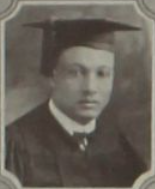
Wells, William Tecumseh “Billie” (B.S., Agricultural Education, 1925)

Headshot of William Tecumseh Wells

William Tecumseh “Billie” Wells was born 9 September 1891 in Solgohachia, Arkansas, to Isaac Lee Wells and Jane Gorman Wells. After graduating from Solgohachia High School, William became a self-employed farmer, according to this World War I Draft Registration Card. Enlistment in the Army for service in World War I on 27 October 1917 meant two more years away from post-secondary education. Wells was discharged on 2 May 1919. Later that year, on 24 December, he married Aubra McKindra and returned to the farm.

Wells attended Prairie View Normal & Industrial College (now Prairie View A & M University) in 1921-22, where he was in the junior Division of Vocational Agriculture. Following that, from 1923 to 1925, he attended Iowa State College, where he was a member of the Agriculture Club (Iowa State University, 1925) as well as the Alpha-Nu Chapter of Alph Phi Alpha by 1924 (Tutt, 1924). During his time in Ames, Wells lived at 200½ Main Street. He earned a Bachelor’s of Science degree in Agricultural Education from Iowa State College in 1925. At the end of January that year, Wells filed for divorce from his first wife on the grounds of desertion during his time at ISC, an undoubtedly difficult situation for him as he completed his studies. When the divorce was granted, Wells married Doris Aline Hutchison on 23 March 1925.

By the 1930 census, William and Doris had moved to Taft, Oklahoma, where he took a job as a teacher and Superintendent for the Farms of the State Hospital, Deaf, Blind, Orphans, and Girls Reformatory. Known as the DB&O, the orphanage housed more than 300 African American children in the mid-1930s (“Preserving a Bit of Oklahoma’s History,” 2007). In 1935, Wells attended the banquet held for Iowa State Alumni at the inauguration of Frederick D. Patterson as President of Tuskegee. By 1946, Wells is listed in the Muskogee, Oklahoma, City Directory as a “rehabilitation officer,” and by 1957, he was a teacher at the Manual [High] School in Muskogee, where he taught until at least 1959.

William T. Wells died on 6 January 1977 in Sterling Heights, Michigan, and was buried in Booker T. Washington Cemetery, Muskogee, Oklahoma.

Sources

Photo credit: Iowa State University. (1925). 1925 Bomb, v. 32 Special Edition, p. 85. Retrieved from https://digitalcollections.lib.iastate.edu/islandora/object/isu%3ATheBomb_41631#page/100/mode/2up

“Preserving a bit of Oklahoma’s history.” (2007, Feb. 20). News on 6. retrieved from https://www.newson6.com/story/5e36891a2f69d76f6209f7b5/preserving-a-bit-of-oklahomas-history

Tutt, Harold L. (1924, June). Alpha-Nu chapter, Des Moines, Iowa. The Sphinx, 10(3), p. 17. ISSUU. Retrieved from https://issuu.com/apa1906network/docs/192401003

Otis (sometimes Oatis), Jesse Rodgers Delbert  (B.S. , Animal Husbandry, 1925)

Headshot of Jesse R.D. Otis

Jesse Rodgers Delbert Otis was born in Carson, Mississippi, on 9 July 1899 to Delbert Otis and his wife, Anna Sims Otis, farmers. Jesse attended school in Piney Woods, Mississippi, and, then, in Three Oaks, Michigan, where he was the lone Black student in a class of 37. Otis’s farming background served him well in Michigan, where he lived with a local farmer and dairy owner, working as a farmhand, dairyman, and milk delivery boy to earn his keep (Johnson, 2021).

At ISC Jesse Otis studied Animal Husbandry, graduating with a B.S. in 1925. He was active in the Agriculture Club on campus and also as a member of the Alpha-Nu Chapter of Alpha Phi Alpha fraternity in 1923, belonging alongside Iowa State brothers A.C. Aldridge, J. G. Trice, F. D. Patterson, L. A. Potts, J. L. Lockett, J. W. Fraser, and R. B. Atwood (Aldridge, 1923). In 1935, Otis reunited with many of his fraternity brothers at a ISC Alumni Banquet at Tuskegee to celebrate the inauguration of brother Frederick D. Patterson as President of Tuskegee Institute. Otis had been teaching at Tuskgee since around 1928, when he left his teaching job at Piney Woods School after three years. He stayed at Tuskegee for the next seven years (Johnson, 2021). In 1933, Otis earned an M.S. in Agriculture and Life Sciences from Cornell University. He eventually received his Ph.D. in the same field in 1944 from the same institution.

The years between arriving at Tuskegee and taking the position of President of Mississippi’s Alcorn Agricultural and Mechanical College (now Alcorn State University) in 1946 saw Dr. Otis firmly establish himself in the field of agriculture as an expert and a teacher. According to the Alabama 4-H Center’s “In Remembrance” page, “From 1932 to 1934, he served as Specialist in Extension farm work. The next ten years found him in the nation’s capital working at the Department of Interior. Desiring to be back closer to the people he hoped to help, Dr. Otis held the position of Alabama State Leader for Negro Work from 1944 to 1946. In 1946 Dr. Otis was selected to be president of Alcorn College for Negroes at Alcorn, Mississippi” (n.d.).

Dr. Otis served as president at Alcorn A&M until 1957, when Mississippi Governor Coleman removed him from his post following a multi-week student boycott sparked by an Alcorn history professor who “wrote a series of articles for the Jackson State Times linking the NAACP to communism and criticizing Congressman Adam Clayton Powell” (Johnson, 2021).

J. R. D. Otis returned to Tuskegee Institute to finish his career as the Director of the School of Education. He married Frankie Althalyn Williams on 25 July 1959 and remained married to her until is death 3 January 1970. He is buried at Oaklawn Memorial Cemetery in Mobile, Alabama.

Sources

Photo Credit: Iowa State University. (1925). 1925 Bomb v.32 special edition, p.72. Retrieved from    https://n2t.net/ark:/87292/w9rp82 

Aldridge, A. C. (1923, June). “Alpha Nu Chapter State College of Iowa, Des Moines, Iowa.” The Sphinx, 9.3, p. 17.

In remembrance…Jesse R. Otis (1899-1970). (n.d.) Alabama 4-H Center. Retrieved from  https://alabama4hcenter.org/jesse-r-otis/ 

Johnson, David. (2021, February 17). 1940s Three Oaks class project reveals the story of Jesse Otis. Harbor country news. Retrieved from  https://www.harborcountry-news.com/features/1940s-three-oaks-class-project-reveals-the-story-of-jesse-otis/article_24f6c234-eca6-5d66-9d33-486bd86eeeef.html 

Atwood, Rufus Ballard (B.S., Agricultural Education, 1923)

Headshot of Rufus Ballard Atwood

Rufus Ballard Atwood was born 15 March 1897, in Hickman, Kentucky, one of seven children of Rufus “Pomp” Atwood, day laborer, and Annie Parker Atwood, who took in washing.

Atwood started his academic career at Fisk University in Nashville and, while still a student there, enlisted in the army to serve in France during WWI. He received a Bronze Star for bravery before returning to Fisk to complete his A.B. degree. In order to pursue more advanced education than Fisk was able to provide at that time, Atwood enrolled at Iowa State and graduated with his B.S. in Agricultural Education in 1923. During his time at Iowa State, he was active in the Ag Club and Vocational Education Club, as well as the Alpha-Nu Chapter of Alpha Phi Alpha, belonging alongside Iowa State brothers John “Jack” Trice, Jesse Otis, Frederick Patterson, Lawrence Potts, John Lockett, James Fraser, and Aubrey Aldridge. He married Mabel Edith Campbell on 28 June 1921 in Petersburg, Virginia, while he was still a student at Iowa State.

Following his graduation from ISC, Atwood embarked on a distinguished career as a leader at two HBCUs. In 1923, he was hired as a Professor of Agriculture at Prairie View State Normal & Industrial College (now Prairie View A&M University), in Prairie View, Texas. By 1926, he was Director of the Agricultural Department, and one of four Iowa State graduates among the department’s seven professors. His colleagues included Edward Evans, Lawrence Potts, and John Lockett, with Joseph Alexander soon to acquire his M.S. and become the fifth ISC graduate on the faculty. 

He later became Acting President of the institution. In 1929, Atwood moved from Prairie View to become the ninth and longest-serving president of Kentucky State Industrial College for Colored Persons (now Kentucky State University), holding the office from 1929 to 1962. While there, Atwood was recognized for his dedication to quality education and his inspirational leadership, which transformed the school into an accredited four-year college. For his work, he received the Sullivan Medallion in 1962, the first African American to receive the University of Kentucky’s highest honor.

Rufus Atwood died, aged 83, on 18 March 1983 in Cincinnati, Ohio. He is buried in Frankfort Cemetery, Frankfort, Kentucky.

Sources

css.php