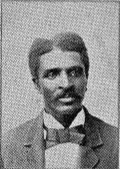
Carver, George Washington (B.S., 1894; M.S., Agricultural Science, 1896)

Headshot of George Washington Carver

George Washington Carver was born around 1864 (exact year unknown) to Mary Carver on the Moses Carver plantation in Diamond Grove, Missouri. George’s father was killed in an accident before his son’s birth, so Carver never met his father. George was raised from infancy on the plantation of Moses and Susan Carver, his mother having been lost in a slave raid from which baby George had been returned to the Carvers (Fishbein, 2007).

Carver’s childhood is well documented, so we won’t attempt to cover that aspect of his life in this biography. Readers interested in his developmental years may consult the many biographies of this well-respected scholar.

Imbued with a lifelong thirst for learning and detailed knowledge about flora and plants, Carver left Diamond Grove, where there were no schools for African Americans, to pursue his education. Though frail as a child, he moved to several parts of Missouri, Kansas, and Iowa before attending Simpson College in Indianola, Iowa, to study piano and painting. At Simpson College, art instructor Etta Budd recognized Carver’s talent with plants and convinced him to pursue a degree in agriculture. With Budd’s father being the head of the Department of Horticulture at Iowa State College of Agricultural and Mechanic Arts (now Iowa State University), Carver became the first Black student to enroll at the college. During his time at ISC, evidence suggests that he lived on campus in the servant’s quarters in North Hall. After Carver completed his bachelor’s degree in 1894, Professors Joseph Budd and Louis Pammel encouraged him to pursue a graduate degree. Carver was appointed as a member of ISC’s faculty, becoming Iowa State’s first African American faculty member. Then, following attainment of his M.S. in Agricultural Science in 1896, he was invited by Booker T. Washington to work at the Tuskegee Institute. Developing 325 products from peanuts and hundreds of other products from other plants native to the South, Carver’s work gained international reputation.

Passing away in 1948, he received many honors including: the Roosevelt Medal for Outstanding Contribution to Southern Agriculture in 1939; a museum dedicated to him at Tuskegee in 1941; the establishment of the George Washington Carver National Monument in Diamond Grove, the first national monument dedicated to an African American and a non-president, in 1943; a park named after him in Winterset, Iowa, where Carver lived in 1888, one hundred years later in 1988; an honorary Doctor of Humane Letters from Iowa State University in 1994; and being inducted into the U.S.D.A.’s Hall of Heroes in 2000. The plaque at the George Washington Carver National Monument in Diamond Grove reads as follows: “Within this area by act of Congress of July 14, 1943, is preserved the birthplace of George Washington Carver who rose from slavery to become a distinguished scientist and a great force in creating racial understanding.”

Iowa State College Thesis Title: Plants as modified by man (bachelor’s thesis), 1894

Sources

Photo Credit: The Bomb

Fishbein, Toby. (2007). The legacy of George Washington Carver. Published for the George Washingtopn Carver All-University Celebration. Iowa State University. Internet Archive. Accessed 30 April 2023. https://web.archive.org/web/20120320224324/http://www.lib.iastate.edu/spcl/gwc/bio.html

https://digitalcollections.lib.iastate.edu/islandora/object/isu%3ACarver

https://www.madisoncounty.com/george-washington-carver/

Hardy, John Garrick  (M.S., Vocational Guidance, 1933)

Headshot of John Garrick Hardy

John Garrick Hardy was born 16 November 1909 in Baldwin County, Alabama, to John Hardy and Pinkie Sommerville Hardy. In 1933, shortly after John earned his Master’s degree in Vocational Guidance from Iowa State College after only nine months in the program, he began teaching at Alabama State Teachers College (now Alabama State University) in Montgomery, Alabama, the institution where he taught for forty-six years (“Archive Record,” n.d., para. 4). Prior to attending ISC, he had earned a Bachelor’s of Science degree from that same school. In 1935, Hardy joined other Iowa Staters at the banquet held by the Iowa State Alumni Association for Frederick D. Patterson’s inauguration as President of Tuskegee. Four years later, Hardy married Mildred Elizabeth Motley on 25 December 1939 in Autauga, Alabama.

In 1946, with a completed Ph.D. from the University of Wisconsin, Dr. Hardy became “the first Black in the State of Alabama, who graduated from an all Black Public State supported institution of higher learning, to receive a Master’s degree (Iowa State University) and a Ph.D. degree (University of Wisconsin)” (“Archive Record,” n.d., para. 4). In recognition of his long-time impact on Alabama State and its students, Dr. Hardy received an honorary Doctor of Laws degree in the spring of 1977 (“Archive Record,” n.d., para. 4).

He ended his career as the head of the Sociology Department at Alabama State. The John Garrick Hardy University Center at Alabama State is named for him. His life was marked by a strong record of community service and commitment to bettering the lives of others. Dr. John Garrick Hardy passed away on 9 November 1986. He is buried in the Remount Park Cemetery in Montgomery, Alabama.

Iowa State College Dissertation Title: A study of the vocational intentions of negro students in fourteen city high schools in Alabama, 1933 

Iowa State University Catalog Record:https://iowa-primo.hosted.exlibrisgroup.com/permalink/f/12tutg/01IASU_ALMA21201769240002756

Sources

Photo credit: Archive record: Dr. John Garrick Hardy Collection. (n.d.) Levi Watkins Learning Center. Alabama State University. Retrieved from  https://alasu.pastperfectonline.com/archive/6AA61ED5-D87C-4710-96C1-385424122018 

Archive record: Dr. John Garrick Hardy Collection. (n.d.) Levi Watkins Learning Center. Alabama State University. Retrieved from  https://alasu.pastperfectonline.com/archive/6AA61ED5-D87C-4710-96C1-385424122018

Otis (sometimes Oatis), Jesse Rodgers Delbert  (B.S. , Animal Husbandry, 1925)

Headshot of Jesse R.D. Otis

Jesse Rodgers Delbert Otis was born in Carson, Mississippi, on 9 July 1899 to Delbert Otis and his wife, Anna Sims Otis, farmers. Jesse attended school in Piney Woods, Mississippi, and, then, in Three Oaks, Michigan, where he was the lone Black student in a class of 37. Otis’s farming background served him well in Michigan, where he lived with a local farmer and dairy owner, working as a farmhand, dairyman, and milk delivery boy to earn his keep (Johnson, 2021).

At ISC Jesse Otis studied Animal Husbandry, graduating with a B.S. in 1925. He was active in the Agriculture Club on campus and also as a member of the Alpha-Nu Chapter of Alpha Phi Alpha fraternity in 1923, belonging alongside Iowa State brothers A.C. Aldridge, J. G. Trice, F. D. Patterson, L. A. Potts, J. L. Lockett, J. W. Fraser, and R. B. Atwood (Aldridge, 1923). In 1935, Otis reunited with many of his fraternity brothers at a ISC Alumni Banquet at Tuskegee to celebrate the inauguration of brother Frederick D. Patterson as President of Tuskegee Institute. Otis had been teaching at Tuskgee since around 1928, when he left his teaching job at Piney Woods School after three years. He stayed at Tuskegee for the next seven years (Johnson, 2021). In 1933, Otis earned an M.S. in Agriculture and Life Sciences from Cornell University. He eventually received his Ph.D. in the same field in 1944 from the same institution.

The years between arriving at Tuskegee and taking the position of President of Mississippi’s Alcorn Agricultural and Mechanical College (now Alcorn State University) in 1946 saw Dr. Otis firmly establish himself in the field of agriculture as an expert and a teacher. According to the Alabama 4-H Center’s “In Remembrance” page, “From 1932 to 1934, he served as Specialist in Extension farm work. The next ten years found him in the nation’s capital working at the Department of Interior. Desiring to be back closer to the people he hoped to help, Dr. Otis held the position of Alabama State Leader for Negro Work from 1944 to 1946. In 1946 Dr. Otis was selected to be president of Alcorn College for Negroes at Alcorn, Mississippi” (n.d.).

Dr. Otis served as president at Alcorn A&M until 1957, when Mississippi Governor Coleman removed him from his post following a multi-week student boycott sparked by an Alcorn history professor who “wrote a series of articles for the Jackson State Times linking the NAACP to communism and criticizing Congressman Adam Clayton Powell” (Johnson, 2021).

J. R. D. Otis returned to Tuskegee Institute to finish his career as the Director of the School of Education. He married Frankie Althalyn Williams on 25 July 1959 and remained married to her until is death 3 January 1970. He is buried at Oaklawn Memorial Cemetery in Mobile, Alabama.

Sources

Photo Credit: Iowa State University. (1925). 1925 Bomb v.32 special edition, p.72. Retrieved from    https://n2t.net/ark:/87292/w9rp82 

Aldridge, A. C. (1923, June). “Alpha Nu Chapter State College of Iowa, Des Moines, Iowa.” The Sphinx, 9.3, p. 17.

In remembrance…Jesse R. Otis (1899-1970). (n.d.) Alabama 4-H Center. Retrieved from  https://alabama4hcenter.org/jesse-r-otis/ 

Johnson, David. (2021, February 17). 1940s Three Oaks class project reveals the story of Jesse Otis. Harbor country news. Retrieved from  https://www.harborcountry-news.com/features/1940s-three-oaks-class-project-reveals-the-story-of-jesse-otis/article_24f6c234-eca6-5d66-9d33-486bd86eeeef.html 

css.php