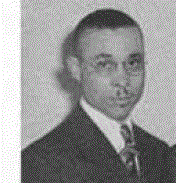
Bailey, Robert Lawson (M.S., Poultry Products, 1946; Ph.D., Poultry  Physiology, 1950)

Headshot of Robert Lawson Bailey

Iowa State College Thesis Title: Effects of implanting pituitary glands and injecting avian blood serum extract into chickens, 1950

Iowa State University Library Digital Repository Link: https://doi.org/10.31274/rtd-180813-14966 ; 

Iowa State College Dissertation Title:  Water absorption characteristics of dressed poultry carcasses, 1946

Iowa State University Catalog Record: https://iowa-primo.hosted.exlibrisgroup.com/permalink/f/12tutg/01IASU_ALMA21232861230002756

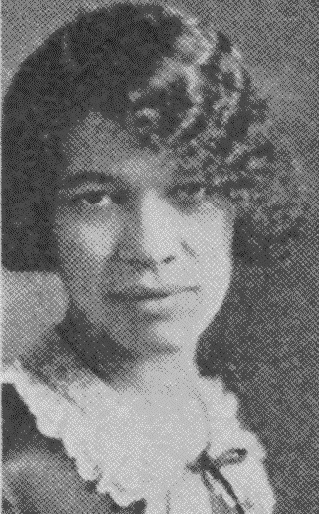
Owens, Ana Elnora (M.S., Home Economics, 1932)

Elnora Ana E. Owens earned a master’s degree in Home Economics from Iowa State College in 1932. After graduating from Iowa State, in 1935 she was listed as the Supervisor of Directed Teaching in the Division of Home Economics at the Virginia State College for Negroes  (presently Virginia State University). Like other Iowa Staters, she was listed as an attendee at the banquet held by the Iowa State Alumni Association for Frederick D. Patterson’s inauguration as President of Tuskegee, in 1935. In the early 1940s Owens became an Assistant Professor of Home Economics. Her family has several ties to the university; the Owens building at Virginia State University was named after her father.

Iowa State College Dissertation Title: Home activities and housing conditions of Negro girls in the rural secondary schools of Virginia as an index to their curricular needs, 1932

Iowa State University Catalog Record:https://quicksearch.lib.iastate.edu/permalink/01IASU_INST/174tg9m/alma990006522850102756 

Sources

Biography available at  HBCU Connections at Iowa State University :  Anna E. Owens http://hbcuconnections.iastatedigital.org/Anna_E._Owens )

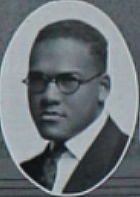
Stewart, Katherine Glass (B.S., 1934, M.S., Child Development, 1948)

Headshot of Katherine Glass Stewart

Ms. Stewart completed her thesis, Differences between Fathers and Mothers in Knowledge of and Attitudes toward Child Behavior, in 1948 to earn her Master’s of Science degree at Iowa State in Child Development.

Iowa State College Dissertation Title: Differences between fathers and mothers in knowledge of and attitudes toward child behavior, 1948

Iowa State University Catalog Record:https://quicksearch.lib.iastate.edu/permalink/01IASU_INST/174tg9m/alma990009337230102756 

Patterson, Frederick D. (“Pat”) (D.V.M., 1923; M.S., Agriculture, 1927)

Headshot of Frederick D Patterson

By Brad Kuennen, Iowa State University Vet Med and Animal Science Librarian

Born October 10, 1901, in Washington, D.C., Patterson was the youngest of six children born to William Ross and Mamie Brooks Patterson. Tragically, both of his parents would die from illness before Patterson turned two years old.

When his oldest sister, Wilhelmina, graduated from the Washington Conservatory of Music sometime around 1908, she moved to Texas to start her career in music education taking young Frederick Patterson with her. She worked at several different schools in Texas and Oklahoma, and used any extra money she had to pay for her brother’s education. Eventually she landed a job teaching music at Prairie View State Normal School and Industrial College (now Prairie View A&M University) and Patterson, who had been staying with relatives up to this point, moved in with her and enrolled at the school.

It was at Prairie View that Patterson first became interested in veterinary medicine. During his junior and senior years, Patterson spent many hours with the young school veterinarian, Edward B. Evans, who had just earned his DVM from Iowa State College (now University). He encouraged Patterson to pursue a career in veterinary medicine and recommended Iowa State to him. 

Patterson arrived in Ames, Iowa, during the late summer of 1919 and enrolled at Iowa State. Four years later, in the spring of 1923, he had earned his DVM. He accepted a position teaching agriculture at Virginia State College and worked there for nearly five years. While at Virginia State, Patterson received a fellowship from the Rockefeller Foundation General Education Board to pursue an advanced degree. He was granted leave from his teaching position and returned to Iowa State where he completed his M.S. in veterinary pathology in 1927. He returned to Virginia to take up his teaching role again, but was soon contacted by Tuskegee Institute (now University) about a teaching position there.

Patterson accepted the position to teach agriculture and animal science courses and also to act as the school’s veterinarian. He was again offered a fellowship by the Rockefeller Foundation General Education Board to pursue an advanced degree and this time chose Cornell University, where he completed his Ph.D. in bacteriology in 1932. Shortly after returning to Tuskegee, the Director of the Agriculture Division was murdered, and Patterson was put in charge of the agriculture program. When President Robert Moton announced his retirement, the Tuskegee Board of Trustees tapped Patterson to serve as the third president of the school. At his inauguration ceremony that fall, Patterson had just turned 34.

During Patterson’s tenure as president, Tuskegee would face severe budget problems due to the Depression and then a World War. However, he managed to grow the academic programs at the school, oversaw the transition of Tuskegee from a technical institute to an academically diverse university, and established a different approach to fundraising which positively impacted nearly all historically Black colleges and universities (HBCUs) in the country. 

With the assistance of his mentor, Edward B. Evans, and a team of dedicated instructors, Patterson established Tuskegee’s School of Veterinary Medicine in 1945. It remains the only school of veterinary medicine at an HBCU and is estimated to have trained 70 percent of African American veterinarians in the United States. In addition, Patterson established a commercial aviation program in 1939, giving students the opportunity to earn a commercial pilots license. The school would also be home to a military aviation training program during the war whose pilots, the famed Tuskegee Airmen, would earn a stellar record and reputation. During his tenure, Patterson also oversaw the creation of the school of engineering and the program in commercial dietetics.

Sources

Biography available at  HBCU Connections at Iowa State University :  Frederick D. Patterson ( http://hbcuconnections.iastatedigital.org/Frederick_D._Patterson

Madison, Walter G. Sr. (B.S., Mechanical Engineering, 1914; M.S., Engineering)

Headshot of Walter G Madison Sr

Evidence suggests that Walter Garfield Madison, member of the Cosmopolitan Club, 1914 graduate of Iowa State College, and head of an early Black family in Ames, was the first Black Iowa State student to put down roots in Ames after he graduated.

Madison came to Ames sometime between his graduation from Tuskegee in 1909 and his enumeration in the US Census on May 5th, 1910, as a laborer living at the campus home of Edgar Stanton. Such a move before enrolling would have helped Madison establish Iowa residency to lower his cost of tuition. Born in Manor, Texas, in 1888, Madison had left his parents and eight brothers and sisters behind to seek higher education in engineering, first earning a diploma in Steam Engineering from Tuskegee Institute and, then, a Bachelor’s of Science degree in Mechanical Engineering from Iowa State College. While at ISC, Madison played clarinet in the band, participated in the Forum Literary Society, and the Cosmopolitan Club.

His marriage to Gussie Irene Askew occurred in Cook County, IL, in 1917. The two later moved into a house at 1204 Third Street and had 4 sons—Walter Jr., Archie, Horace, and Ira. Both Walter, Jr., and Archie attended Iowa State.

The Madisons became one of the leading Black families in Ames, with Walter operating a successful plumbing and heating company that, over the years, won significant contracts with the City of Ames, Tuskegee Institute, and Fisk University, among others. Throughout his time in Ames, Madison was a strident voice for respectful and equitable treatment of Blacks. In 1922, he won a lawsuit against an Ames restaurant owner for discrimination.

Like Archie and Nancy Martin, progenitors of the best-known Black family in Ames, who housed Black students in their home at 218 Lincoln Way, the Madisons opened their home to no fewer than 12 Black ISC students and also took in other Black lodgers between 1926 and 1941.

After some years splitting time between his Ames business and work at Fisk University in Nashville, where he held the position of Chief Engineer beginning in 1938, Madison moved his family from Ames permanently to take up employment as a Professor of Engineering at Howard University in 1942.

Iowa State College Dissertation Title: The design of a central heating system [for the] Tuskegee Normal and Industrial Institute (Ala.), 1914 

Iowa State University Catalog Record:https://iowa-primo.hosted.exlibrisgroup.com/permalink/f/12tutg/01IASU_ALMA21190364460002756 

Sources

Photo Credit: Iowa State University. (1914). The Bomb 1914. p. 83. Retrieved from  https://digitalcollections.lib.iastate.edu/islandora/object/isu:TheBomb_47457#page/94/mode/2up

Biography available at  HBCU Connections at Iowa State University :  Walter G. Madison, Sr. ( http://hbcuconnections.iastatedigital.org/Walter_G._Madison,_Sr. )

css.php